
Branded Workplace Weather Kits in Canada: Practical Picks for Commutes, Field Days and Event Arrivals
Branded Workplace Weather Kits in Canada: Practical Picks for Commutes, Field Days and Event Arrivals
A useful weather kit does not need to be a large gift box. For Canadian employers, it is a compact, role-appropriate set of branded items that removes small obstacles before a commute, an outdoor shift or an event arrival. The best kits feel considered because every piece has a job: stay dry, keep hands usable, carry essentials or improve visibility when daylight is limited.
That practical focus matters when buying branded workplace weather kits Canada teams will actually carry. A single, well-chosen item can suit a broad office population; a two- or three-piece kit often works better for mobile staff, field crews or attendees moving between parking, transit and a venue. The objective is not to cover every condition. It is to select items that match the exposure, the available storage and the way recipients will use them.
Start with the moment that creates the friction
Procurement becomes easier when the kit is designed around a specific arrival or work moment rather than a season. Ask the manager or event lead what happens immediately before the item is needed. Is the recipient walking from transit in rain, checking a phone at a chilly venue entrance, carrying lunch to a field location, or opening a vehicle before an early shift? Those answers determine which items deserve the budget.
Commutes and client-facing arrivals
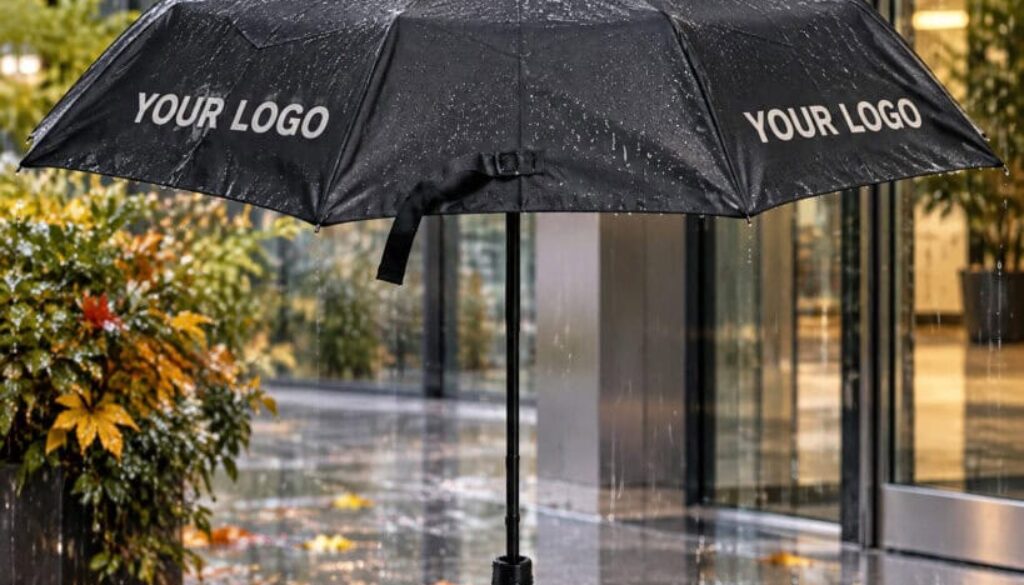
For commuter populations, portability is the first filter. A compact Horizon 44-inch Arc Auto Open and Close Portable Umbrella gives recipients a rain-ready option that can live in a work bag or vehicle. Pair it with Jazzhander touchscreen gloves when people need to tap a transit app, respond to a message or check directions outdoors. A small pairing is easier to distribute at a staff meeting, onboarding pickup or registration desk than an overbuilt bundle.
Choose the umbrella format to match the journey. A portable model suits transit and pedestrian use; a larger canopy may make more sense for hosts escorting guests from parking to the door. The CanPromos umbrella collection is a helpful starting point for comparing formats. Keep logo placement simple and legible: a one-colour mark on an umbrella panel or glove cuff is often more useful than trying to reproduce a detailed campaign graphic at a small scale.
Field days, site visits and mobile teams
Field-oriented kits need to respect how people carry gear. If a team is moving on foot, by bicycle or between work areas, a Custom CamelBak Hydration Pack – 70 oz. can be a strong anchor for active, outdoor-oriented roles. It is not a universal employee item; it is a targeted option when hands-free carry and regular movement are central to the day.
For teams that need useful light during set-up, shutdown or a vehicle check, add the Flarestar 9 LED Flashlight. Light is a practical add-on, not a replacement for a worksite lighting plan or required protective equipment. Where site conditions call for formal safety gear, begin with the employer’s health-and-safety requirements and use the safety equipment category to discuss complementary promotional options with a CanPromos representative.
Outdoor lunches, sidelines and event queues
Some workplace events involve a long arrival window, an outdoor lunch or a sideline rather than sustained field work. Here, a carry solution can make the kit more valuable without adding unnecessary pieces. The Pioneer Cooler Bag and Convertible Table Mat suits a team meal or community-facing event where a clean surface is useful. For wet sidelines or day trips, the Riverdale 15L Waterproof Cooler Bag gives organizers a weather-conscious way to carry snacks and supplies.
Neither item needs to be framed as a seasonal giveaway. It works best as a practical field-day or event-hosting tool. If moisture protection is the main requirement rather than food carry, compare alternatives in CanPromos’ dry bag category before committing to a cooler-style format.
Build three kit levels, not one oversized package
A tiered approach protects the budget and recognizes that not every role faces the same conditions. It also makes replenishment easier: you can reorder the most-used component rather than redesigning a full kit each time.
| Kit level | Best for | Suggested contents | Procurement note |
|---|---|---|---|
| Everyday arrival | Office, hybrid and customer-facing teams | Portable umbrella; touchscreen gloves | Prioritize compact storage and broad-size usability. |
| Mobile workday | Field staff, facilities and event operations | Flashlight; gloves; role-appropriate carry item | Confirm whether any item could be confused with mandated PPE. |
| Hosted outdoor day | Registrants, volunteers and team hosts | Umbrella or carry item; event information card | Distribute at check-in or in advance, not after people are already exposed. |
The table is a starting point, not a product prescription. A municipal office with transit commuters may need the everyday arrival tier at scale. A regional operations team may reserve the mobile workday tier for people who routinely travel between locations. Separating these audiences prevents a higher-cost item from being purchased for recipients who will not use it.
Make weather readiness part of a sensible safety plan
Promotional merchandise can support readiness, but it does not create a safe-work program. The Canadian Centre for Occupational Health and Safety notes that cold exposure is shaped by air temperature, wind and wetness, and recommends controls, training and suitable clothing alongside protective equipment.1 Use that distinction in internal approvals: branded gloves or a toque may improve comfort, while supervisors still own risk assessments, work/rest decisions and any required PPE.
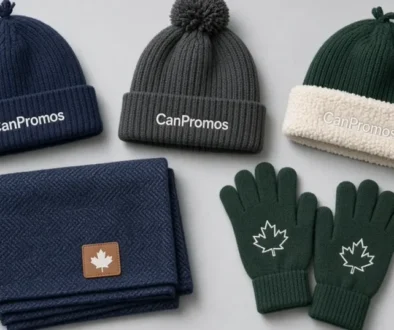
For colder routes and early starts, a branded headwear item may be appropriate as an optional comfort piece; review the beanies and toques selection alongside uniform rules and hard-hat requirements. For outer layers, the jackets and outerwear category can help buyers assess whether a more durable, size-based program is justified. Do not promise that a promotional garment is waterproof, insulated or compliant unless the supplier specifications and your own safety requirements confirm it.
A vehicle-oriented add-on can also make sense for staff who begin or finish shifts in parking areas. The winter auto accessories category provides options to review before colder conditions arrive. Again, position these as convenience items, not substitutes for vehicle maintenance, local travel guidance or emergency procedures.
Brand for recognition, not decoration
Weather items are often used in public: outside a building, on a transit platform or at an event entrance. That gives a restrained brand treatment more value than a crowded design. Start with the mark that remains recognizable at arm’s length. Then confirm the available imprint area, material colour, print method and artwork requirements before approving a proof.
For a client or leadership travel use case, the Aeroloft Business First Travel Blanket with Sleep Mask can be a separate comfort option rather than part of every weather kit. It is particularly suited to travel between meetings or overnight journeys, where compact comfort is more relevant than rain protection. Keep it in a distinct tier so the kit remains honest about its purpose.
If the program includes multiple business units, use a consistent master logo and a small, replaceable event card for the date or location. This avoids making the reusable item obsolete when an event changes. It also lets procurement order a higher-utility product while communications retains room for a timely message.
The procurement checklist before requesting a quote
A clear quote request reduces revisions and helps suppliers recommend realistic options. Provide the following information at the outset:
- Recipient and use case: State whether the kit is for commuters, a mobile crew, registrants or event hosts. Include the expected exposure to rain, wind, cold and low light.
- Quantity by tier: Separate core-team quantities from event quantities. Include a modest contingency only where late additions are likely.
- In-hands date and delivery points: Work backward from the distribution date, allowing time for artwork approval, production, shipping and internal sorting. If kits are going to several offices, identify each destination early.
- Branding instructions: Supply vector artwork, brand colours, preferred logo version and any bilingual copy requirements. Ask for an artwork proof before production.
- Budget and substitutions: Give a per-recipient target and identify which component is essential. This allows a practical alternative if stock, decoration method or lead time changes.
- Packing plan: Decide whether items will be individually packed, assembled by location or handed out one at a time. A neat distribution plan can matter as much as the product selection.
Ask for current stock and production timing before announcing the program. Product availability and decoration lead times change, so a live quote is more reliable than a previous order or a general planning assumption. For recurring programs, record the exact product, colour, decoration details and approved proof so a future reorder starts from a useful baseline.
Give recipients a reason to keep the kit close
The strongest weather kits are introduced with a short, practical message: keep this in your work bag, vehicle or entryway; use it for the walk from transit, a site visit or an outdoor arrival. Avoid treating the kit as a substitute for checking conditions. Environment and Climate Change Canada’s WeatherCAN service provides current conditions, forecasts, radar and alert notifications across Canada, so it is a credible prompt for staff to check local conditions before travel.2
For a workplace that wants a small, useful program rather than a generic seasonal promotion, start with one real friction point and one durable item. Then add only the component that makes the item easier to use in that setting. CanPromos can help turn the recipient list, budget, decoration requirements and in-hands date into a weather-kit shortlist that is practical for Canadian workdays.
References