
Branded Hybrid Work Kits in Canada: A Procurement Guide for Meetings, Commutes and Business Travel
Branded Hybrid Work Kits in Canada: A Procurement Guide for Meetings, Commutes and Business Travel
Hybrid work has changed the job of a branded kit. The useful kit is no longer a welcome-box gesture or a collection of unrelated giveaways. It is a small, purposeful system that helps people move between a home desk, a shared office, a client meeting and an airport without losing focus or looking unprepared.
For Canadian procurement and people teams, branded hybrid work kits Canada should start with work situations rather than a catalogue. A consultant travelling to a client site needs different support from an analyst booking a focus room twice a week. The common requirement is dependable utility: carry, concentration, note-taking and travel readiness. Flexible work remains a practical purchasing consideration: in the fourth quarter of 2025, a median 26.6% of services-producing businesses in rural self-contained labour areas expected to offer remote-work arrangements.1
This guide sets out a disciplined way to specify, source and distribute a kit that people can use repeatedly. It is intended for existing teams, client-facing professionals and leadership groups rather than a broad giveaway programme.
Start with the workday, not the item list
A hybrid kit earns its place when each component solves a predictable friction point. Before choosing products, ask recipients to describe the point in their week when they most often have to improvise: entering a meeting with an untidy bag, trying to concentrate in a busy shared space, or repacking essentials for an early flight. Those answers should shape the brief.
Meetings: arrive organised and ready to contribute
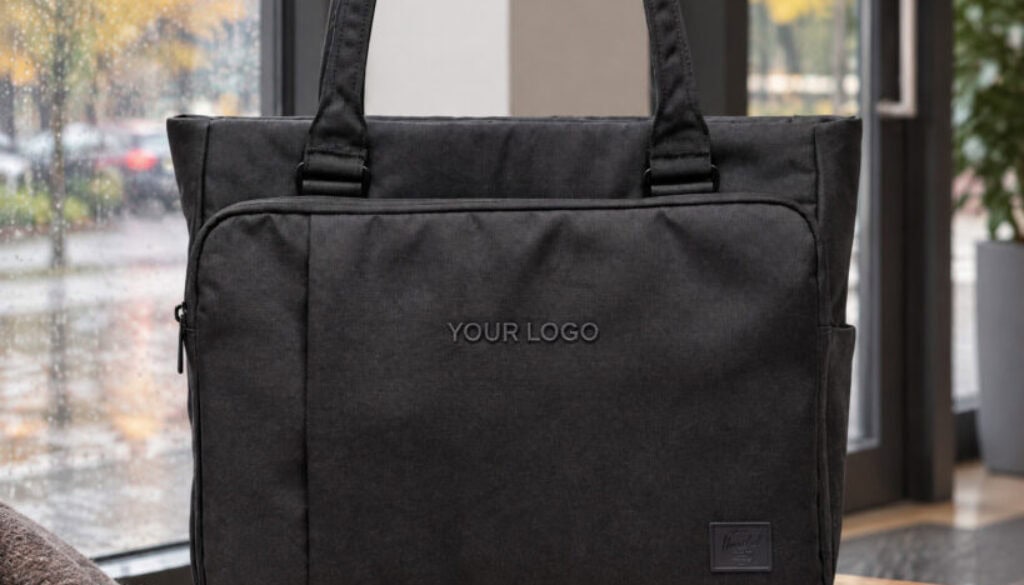
For in-person meeting days, the essentials are a professional carry solution and a reliable writing surface. The Custom Herschel Kaslo Tech Tote is a premium reference point for a laptop, notebook and meeting materials. For a more traditional profile, review computer and messenger bags rather than assuming one silhouette suits everyone.
A recurring-meeting kit does not need several desk objects. The Moleskine Custom Medium Notebook Gift Set suits leadership sessions and client workshops. For a more structured option, compare the Custom Executive FSC Journal with Textured Grommet Spine for material, decoration area and lifespan.
Commutes: protect focus and reduce carry friction
Commuting is the bridge between remote and office work, so additions should be useful before the first meeting begins. In a public workspace, airport lounge or train, personal audio can be more valuable than novelty technology. The Custom JBL Live 770NC Wireless Headphones fit a focused-work or frequent-travel audience; compare the headphones and earbuds category when price point or format differs.
Match carry capacity to the normal load, not the largest possible load. Ask whether recipients carry a laptop, charger, documents or a change of clothes on a typical day. The Custom Samsonite Laptop Portfolio is a useful comparison point for a contained professional kit.
Business travel: keep continuity without overpacking
Travel kits should be compact enough to live in a carry-on or work bag. An adapter is practical only after confirming destinations and device needs. The Custom Pegasus Travel Adapter is a sound travel-specific starting point; confirm current specifications and destination compatibility before approving artwork.
For overnight flights or a late return from a conference, comfort can be credible utility. Reserve the Custom Aeroloft Business First Travel Blanket with Sleep Mask for frequent travellers or leadership groups, where its space and cost are justified. CATSA advises travellers to keep batteries and devices containing batteries with them or in carry-on baggage and to check airline policy.2
Build a kit architecture that can scale
A scalable programme uses a core kit plus targeted upgrades. This keeps the experience coherent without one costly configuration for different work patterns. Select one carry item, one focus or meeting item, and one optional travel element. Every item needs a stated use occasion and recipient group.
| Kit configuration | Best-fit recipients | Suggested components | Procurement rationale |
|---|---|---|---|
| Meeting-ready core | Office-flex staff and client-facing teams | Tech tote or portfolio; notebook/journal | Supports office days and client meetings without excess volume. |
| Focus-and-mobility upgrade | Consultants, sales teams and frequent users of shared spaces | Carry item; notebook; wireless headphones | Prioritises concentration and professional presentation across locations. |
| Travel continuity kit | Frequent travellers, leadership off-sites and field-facing professionals | Carry item; travel adapter; travel blanket and mask | Adds specific travel utility only where frequency supports the spend. |
Do not treat tiers as a status ladder. A role-based allocation rule is easier to explain and audit than a loosely defined “premium” list, and simplifies reorders.
Make branding appropriate for professional use
Subtle branding is usually safest for durable work items. A restrained logo, one-colour mark or tonal treatment is more likely to suit an office, customer site and commute. Request a digital proof at actual decoration scale, including its placement relative to seams, zippers, notebook closures and features. Review it with the brand owner.
The decoration method should follow material and use. Before issuing the purchase order, ask about available methods, artwork constraints, colour matching and setup or run charges. For licensed retail brands, confirm acceptable logo use, colours and decoration locations.
A dedicated home-desk addition can suit a smaller group, but should not be added merely to make the kit larger. The Custom Executive Desk Lamp with Multi-Function Display is better for an executive or dedicated-workspace audience than every kit. Can the recipient name when and where they will use it?
Turn the brief into a procurement-ready specification
A clear specification protects budget and delivery date. Before requesting quotes, create a one-page brief stating the programme objective, recipient groups, in-hands date, destinations, quantity by tier, substitutions, per-kit budget range, artwork, packaging and approval owner.
Price the full landed kit, not individual products
Compare options on complete delivered programme cost: product, decoration, setup, packaging, kitting, delivery, taxes and address-level distribution. If destinations vary across Canada, separate bulk office delivery from individual shipping in the quote.
Build a small quantity contingency when roles or travel schedules are changing. A controlled surplus of core items is easier than recreating a configuration later with a different lot, colour or decoration. Keep premium-item contingency tighter and record the reserve holder.
Confirm functionality and supplier details early
Product copy is a starting point, not a final specification. Verify dimensions, laptop fit, material, colours, decoration location, care instructions and accessories against the current proof. For audio or adapters, request current technical specifications and check them against the devices and travel regions in scope. Confirm packing dimensions for travel kits.
Ask for a pre-production sample or virtual proof where logo treatment, colour fidelity or fit matters. A physical sample is particularly sensible for a new bag, premium notebook finish or electronics carrier. Define proof authority and the plan if a preferred colour is unavailable.
Plan distribution as part of the product experience
Distribution should reflect how recipients work. One office delivery may suit groups with regular anchor days, while regional teams may need branch or home delivery. For individual shipping, establish secure address collection, a cut-off date, a returned-parcel plan and a contact point. Do not print personal addresses on a public-facing packing list.
For travel-focused kits, distribute before travel rather than at a general staff meeting. Include a short, practical insert naming component use and care instructions. A clear packing note helps the kit become routine.
Use a short approval checklist before ordering
Before authorising production, confirm the recipient group, documented use cases and cost ceiling. Check final quantity and delivery plan against the in-hands date. Confirm model, colour, decoration, logo proof and substitution path. Review travel specifications for relevant destinations. Ensure the quote separates product, setup, packaging and distribution for budget approval.
A practical next step for Canadian buyers
The strongest branded hybrid work kits are modest in composition and deliberate in purpose. Start with the workday moments that matter, then select components that travel well between home, office, client sites and airports. A tote, notebook and headphones may be sufficient for one group; a travel adapter and compact comfort item may be justified for another.
Bring CanPromos a concise brief with recipient counts, use cases, budget range, brand files and in-hands date. From there, compare the priority products against fit, decoration and distribution requirements—not simply unit price—and request a proof before committing to a final configuration.
References