
The Ultimate Guide to Eco-Friendly Promotional Products in Canada (2026)
In 2026, Canadian consumers and businesses are more environmentally conscious than ever — and the expectations placed on brands have shifted accordingly. Sustainability is no longer a differentiator; it is a baseline expectation. For Canadian marketing and procurement teams, this means that the promotional products you choose to represent your brand say something about your values before a single word is spoken.
The good news is that the market for eco-friendly promotional products has matured dramatically. Gone are the days when “sustainable swag” meant a flimsy recycled pen that broke on first use. Today’s eco-friendly options are genuinely high quality, visually impressive, and available at price points that work for budgets of all sizes. This guide covers the top categories, the best specific products, and how to choose items that are authentically sustainable — not just greenwashed.
Why Eco-Friendly Promotional Products Matter for Canadian Brands
The business case for sustainable promotional products is straightforward. According to Nielsen’s 2026 Canadian Consumer Sustainability Report, 73% of Canadian consumers say they would definitely or probably change their consumption habits to reduce environmental impact. Among Millennials and Gen Z — the fastest-growing segment of B2B purchasing decision-makers — that number climbs above 85%.
When your branded merchandise is made from recycled, renewable, or biodegradable materials, it communicates alignment with these values without requiring a single word of explanation. The product itself is the message. Conversely, a cheap plastic giveaway that ends up in a landfill within weeks actively undermines a sustainability narrative, no matter how many green claims appear on your website.
Beyond brand perception, eco-friendly promotional products tend to have higher retention rates. Items that feel premium, look beautiful, and serve a genuine purpose are kept. Items that feel disposable are disposed of. The economics of brand impressions per dollar strongly favour quality sustainable products over cheap conventional alternatives.
Top Eco-Friendly Promotional Product Categories for 2026
1. RPET (Recycled Plastic) Drinkware and Bags
Recycled PET (rPET) — plastic made from post-consumer recycled bottles — has become the dominant material in sustainable promotional products. It is durable, lightweight, and available in a wide range of colours and formats. The Vida Custom RPET Sports Bottle (22 oz) is one of the standout products in this category: a sleek, branded water bottle that communicates both quality and environmental responsibility. Every bottle diverts plastic from landfill and keeps your logo visible on desks, in gyms, and on hiking trails across Canada.
For bags, rPET tote bags and backpacks are among the most-used promotional items in the market. The Gregory Custom Nano Backpack (16″) is a premium option that uses recycled materials without compromising on the quality and durability that recipients expect from a backpack they will carry daily.
2. Bamboo Products
Bamboo is one of the most sustainable materials on earth — it grows up to 91 cm per day, requires no pesticides, and sequesters more carbon per acre than most trees. For promotional products, bamboo offers a warm, natural aesthetic that photographs beautifully and feels premium in the hand.
The Borinda Custom Bamboo Level with Bottle Opener is a clever dual-purpose item that sits on a desk or workshop shelf — a conversation starter that keeps your brand visible in a home or office environment. For tech-forward audiences, the Amitola Custom Color Changing LED Speaker with Wireless Charger combines bamboo construction with modern functionality, making it one of the most impressive eco-friendly tech gifts available.
3. Seed Paper and Plantable Products
Seed paper is one of the most memorable eco-friendly promotional formats available. Embedded with wildflower, herb, or vegetable seeds, seed paper products are planted in soil after use — the paper biodegrades and the seeds germinate. The Custom Printed Seeded Paper Custom Shapes can be produced in virtually any shape, making them ideal for trade show giveaways, event invitations, and thank-you notes. The zero-waste story is immediately compelling and generates genuine conversation.
4. Reusable Drinkware (Stanley, Custom Tumblers)
The single most impactful thing a brand can do for sustainability in promotional products is replace single-use plastic cups and bottles with high-quality reusable drinkware. The Custom Stanley Flowstate Spring Bottle (20oz) is a retail-brand option with enormous perceived value and immediate brand recognition. Recipients do not just keep a Stanley bottle — they use it every single day, generating thousands of brand impressions over its multi-year lifespan.
5. Sustainable Apparel and Accessories
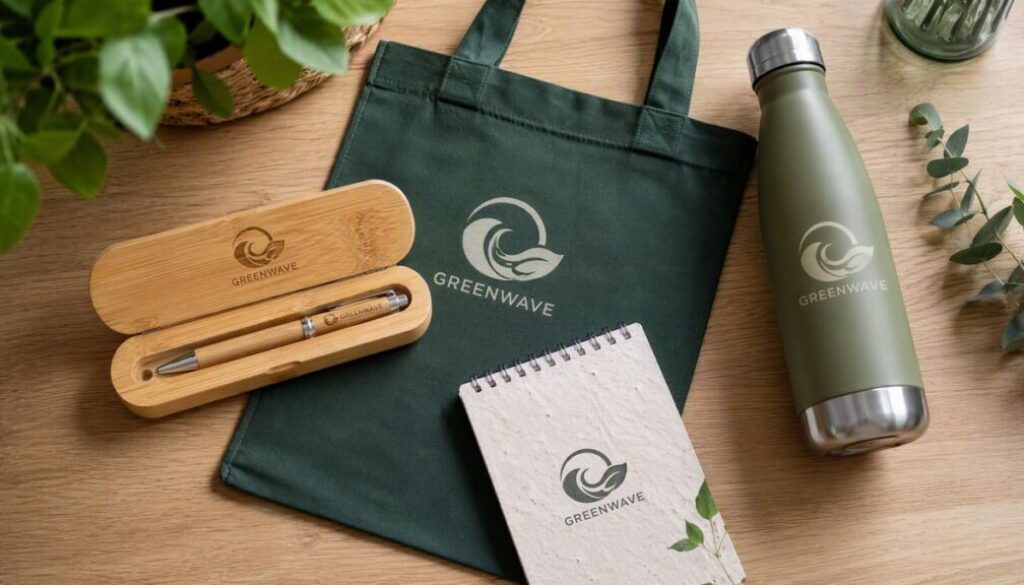
Recycled and organic apparel is one of the fastest-growing categories in promotional products. Caps and hats made from organic cotton or recycled materials are available from multiple suppliers and carry the same embroidery quality as conventional alternatives. For a complete sustainable swag kit, pair recycled apparel with bamboo accessories and an RPET water bottle — the result is a cohesive, premium gift set that tells a clear sustainability story.
How to Verify That Eco-Friendly Claims Are Legitimate
The promotional products industry, like many others, has not been immune to greenwashing — the practice of making environmental claims that are not substantiated by the actual product or manufacturing process. Here is how to ensure the products you choose are genuinely sustainable.
Look for third-party certifications. The most credible eco-certifications for promotional products include the Global Organic Textile Standard (GOTS) for organic apparel, the Forest Stewardship Council (FSC) certification for paper and wood products, and bluesign® certification for textiles. These certifications require independent auditing and cannot be self-awarded.
Ask for material specifications. A legitimate sustainable product supplier will be able to tell you exactly what percentage of recycled content is in a product, where the materials were sourced, and how the product was manufactured. Vague claims like “eco-friendly” or “green” without supporting data are a red flag.
Consider the full lifecycle. A product made from recycled materials but designed to be thrown away after one use is not truly sustainable. Prioritize items with long useful lives — drinkware, bags, apparel, and tech accessories that recipients will use for years, not weeks.
Building an Eco-Friendly Promotional Products Program for Your Canadian Brand
The most effective approach to sustainable promotional products is not to swap out one item at a time, but to build a coherent program that tells a consistent story. Here is a practical framework for Canadian marketing teams.
Start with your highest-volume items. If you distribute thousands of pens per year, switching to bamboo or recycled-content pens has a significant cumulative impact and sends a clear signal to recipients. If you give away bags at trade shows, switching to RPET or organic cotton totes is an immediate upgrade.
Then move to your highest-visibility items. Executive gifts and premium client giveaways are seen by the most influential people in your network. A custom bamboo speaker or a branded Stanley bottle in the hands of a key client communicates your brand values more effectively than any marketing copy.
Finally, document and communicate your choices. Include a brief note with your eco-friendly gifts explaining the material and its environmental benefit. Recipients appreciate the transparency, and it reinforces the sustainability narrative you are building.
Ready to Green Your Brand?
At Canpromos, we source and supply the best eco-friendly promotional products for Canadian businesses. Whether you are building a sustainable trade show kit, refreshing your corporate gifting program, or looking for green alternatives to your current promotional lineup, our team can help you find the right products at the right price.
Request a quote today and let our team build a sustainable promotional products program that reflects your brand’s values. Get a custom proof within 24 hours.
Frequently Asked Questions
What makes a promotional product genuinely eco-friendly?
A genuinely eco-friendly promotional product minimizes environmental impact throughout its lifecycle. This means being made from recycled, renewable, or biodegradable materials; being durable and designed for long-term use; and being produced through sustainable, ethically audited manufacturing processes. Look for third-party certifications like GOTS, FSC, or bluesign® to verify claims.
Are eco-friendly promotional products more expensive than conventional alternatives?
The price gap has narrowed significantly. Many eco-friendly options — particularly RPET drinkware and bamboo accessories — are now priced competitively with conventional alternatives. Premium items like organic apparel and certified sustainable tech accessories carry a modest price premium, but the higher retention rates and stronger brand associations typically deliver better ROI per dollar spent.
How can I ensure the sustainability claims of a product are legitimate?
Ask your supplier for third-party certifications, material specifications, and sourcing documentation. Legitimate sustainable products will have verifiable credentials. Avoid suppliers who use vague terms like “eco-friendly” or “green” without supporting data. At Canpromos, we are transparent about the materials and certifications for every sustainable product we supply.
What are the most popular eco-friendly promotional products in Canada for 2026?
The most popular eco-friendly promotional products in Canada for 2026 include RPET water bottles and sports bottles, bamboo pens and accessories, organic cotton tote bags, seed paper products, reusable premium drinkware (Stanley, custom tumblers), and recycled-content apparel. Tech accessories made from recycled plastics and bamboo are also growing rapidly in popularity.
Eco-Friendly Trade Show Giveaways That Stand Out
Trade shows generate enormous waste — from single-use plastic bags to disposable badge holders and throwaway pens. Forward-thinking Canadian brands are using eco-friendly trade show giveaways to differentiate their booths while demonstrating genuine environmental commitment. The result? Higher booth traffic, more meaningful conversations, and promotional items that attendees actually keep rather than discard at the hotel.
Best Sustainable Giveaways for Canadian Trade Shows
The most effective eco-friendly trade show items combine immediate utility with a visible sustainability story. Reusable water bottles made from recycled materials, bamboo pens, seed paper business cards, and organic cotton tote bags all serve double duty: they are genuinely useful during the event itself, and they carry your brand home with attendees long after the show floor closes.
Green Event Swag That Drives Booth Traffic
Attendees are drawn to booths offering items they can use immediately. A branded reusable coffee cup at a morning session, a bamboo cutlery set at a lunch-and-learn, or a recycled-material notebook for taking session notes — these items create organic engagement because they solve an immediate need while telling your brand’s sustainability story. Consider offering a “swap station” where attendees can trade single-use items for your branded eco alternatives.
Sustainable Booth Materials for Canadian Events
Beyond giveaways, consider the sustainability of your booth itself. Recyclable banner stands, FSC-certified printed materials, and reusable display fixtures all reinforce your environmental messaging. When your booth materials match your giveaway story, the authenticity resonates with environmentally conscious Canadian buyers — particularly in government, education, and healthcare sectors where ESG procurement criteria are now standard.
Planning a sustainable trade show presence? Contact Canpromos for a curated eco-friendly trade show package with volume pricing and fast Canadian delivery.