
January 2027 Breakroom Readiness: A Reusable Lunch-and-Drinkware Plan for Existing Teams
January 2027 Breakroom Readiness: A Reusable Lunch-and-Drinkware Plan for Existing Teams
A reusable lunch container is only useful at work if someone can carry it, clean it and put it away. Before your existing team returns after the December closure period, settle those practical details. A cupboard full of branded mugs does not explain whose mug is whose, and an insulated lunch tote does not solve a lack of refrigeration.
January 2027 breakroom readiness starts with the ordinary workday: where people eat, what they bring and which facilities they can actually use. For Canadian office, facilities and shift-team managers, the goal is a workable personal meal routine—not a matching bundle for every employee. Choose only the items that fill a real gap, then make ownership and care clear.
Map the meal break before choosing products
Walk through the space during a normal break. Notice the refrigerator shelves, sink access, drying area and cupboards. Ask the current team whether they usually bring a single meal, several smaller portions or a drink alongside lunch. Include employees on later shifts; a routine that works for the morning office team may not work when the sink area is busy or supplies have run out.
Separate workplace facilities from personal equipment. Facilities owns the shared refrigerator and cleaning arrangements. Each employee can own their assigned mug, food container and utensils. State whether those items stay at work or travel home for washing. Do not quietly add personal dishes to a cleaner’s responsibilities without agreement.
A small accounting office might need labelled shelf positions for mugs but no new lunch containers. A service team with staggered meal breaks might need containers that fit its existing refrigerator and a place to store empty totes. These are different briefs. Use the food containers and utensils collection to explore a defined requirement, rather than treating every reusable item as necessary.
Assign drinkware to people, not a communal pile
Choose capacity and storage together
The Custom White Ceramic Mugs – 11 oz. provide a straightforward personal-mug option with full-colour printing described on the listing. Confirm the care instructions for this exact CP-MUS model; the page does not establish a product-specific dishwasher or microwave claim. A white surface can support the chosen artwork, but the logo is not an ownership label when everyone’s mug looks the same.
Decide how employees will identify their mugs and where clean mugs belong. A named shelf position can work without adding individual names to the decoration. Check the available shelf depth, handle clearance and ease of retrieving one mug without moving several others. Capacity alone does not answer those storage questions.
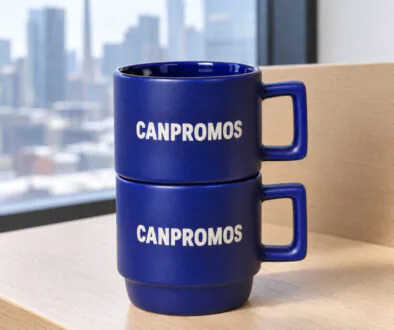
The Totem Custom Mug Set contains two stackable 12 oz. ceramic mugs with square-shaped handles. Consider it only where an individual has a reason and room for a two-mug allocation. For this plan, Totem is personal-use only: it is not recommended for commercial use, and handwashing is recommended. Do not make it communal hospitality service ware or commercial dishwasher inventory.
Make the daily handoff explicit
Tell the team whether personal mugs should be taken home before extended closures and whether cupboard storage is for clean, dry items only. Keep the instructions specific to the chosen model. An office-wide message saying “all mugs are dishwasher safe” would wrongly replace individual care guidance with an assumption.
If handwashing cannot fit the workday, address that before selecting a handwash-recommended item. The practical answer might be home washing or no additional mug, rather than expecting employees to improvise at a sink that is not available to them.
Match meal containers to portions and eating arrangements
Choose a jar for the intended meal
The Hydrapeak Custom Food Jar – 25oz has a wide-mouth opening, a folding handle and double-wall vacuum insulation. Its listed capacity makes portion size a useful starting question: does the employee want one contained meal, or separately packed components? Also consider how the lid and handle will be managed at the eating spot.
The listing describes a leak-proof lid, but that does not remove the need to follow the product’s closure instructions. Nor does the insulation description establish safe food-holding times. Do not translate advertised hot-or-cold duration into permission to leave food unrefrigerated throughout a shift. Ask for the current food-jar care instructions, and do not assume it is a microwaveable reheating container.
Health Canada advises keeping cold food cold and hot food hot, with refrigerators set at 4°C or lower.1 Make appropriate food storage part of the workplace routine independently of the merchandise choice. For employees without refrigerator access, refer them to current public-health guidance for their packed meals rather than promising that a branded jar or bag makes every meal safe.
Choose compartments only when they help
The Custom Double Decker Lunch Box offers two food containers, an adjustable divider, a bamboo lid, an elastic strap and reusable utensils. It suits a different packing preference from a single food jar: employees can organize portions and keep track of several components.
That component count also creates storage work. Agree where the divider, strap and utensils go while the containers are being washed. The listing describes the containers and utensils as dishwasher safe; do not extend that statement to the bamboo lid. Obtain component-specific care instructions and confirm any reheating suitability separately.
For example, an established client-service team might prefer separated portions but have little drying space. The manager should resolve that space constraint before making a multi-part lunch box the default. A useful container should not leave loose lids and straps scattered around the shared sink.
Check the carrying load, not just the bag’s appearance
The Custom Spire Insulated Lunch Tote has carrying handles, top fastener strips and a zippered front compartment for utensils or small items. Those features give the buyer practical questions to answer: can the intended container sit in its normal orientation, can the top close properly, and can the employee retrieve the utensil case without unpacking lunch?
Confirm usable product dimensions with CanPromos, then check the proposed combination against the actual intended load. Include any drink and cooling items the employee normally carries. Do not read shipping-carton measurements as individual lunch-box or tote dimensions, and do not assume two selected products fit together because both appear in lunch categories.
Keep the lunch bags and coolers collection as a browse point for carrying constraints. The right brief is “carry this container and these everyday extras,” not simply “supply an insulated bag.” Insulation is not a food-safety holding-time assurance, and the bag’s cleaning method needs its own confirmation.
Give utensils and hot containers a defined place
The Lunch Mate Custom Cutlery Set includes a fork, spoon and serrated knife in a protective carrying case. Its published one-colour imprint is on the case, not the utensils. Assign the set to an individual and decide where used utensils go until they can be washed. Keep used pieces separate from clean items rather than relying on the case to do the cleaning.
Do not automatically add this set when the chosen lunch box already includes utensils. It can fill a gap for staff using their own existing containers. Confirm the case fits the intended pocket or storage space, and explain that it should hold cleaned, dry utensils for the next meal.
A custom cork trivet can provide a designated landing surface for hot containers. The listed diameter is 7¾ inches, so compare it with the dishes actually used and keep it accessible at the meal area. No maximum service temperature is published. Treat it as a surface-protection accessory, not certified burn protection or a substitute for careful handling.
Make cleaning and drying part of the routine
HealthLink BC recommends washing plates, utensils, cutting boards and countertops with hot soapy water, and changing dishcloths daily.2 Facilities should make the relevant supplies and shared-surface arrangements clear. Individual product-care instructions still govern how each mug, lid, container and bag is treated.
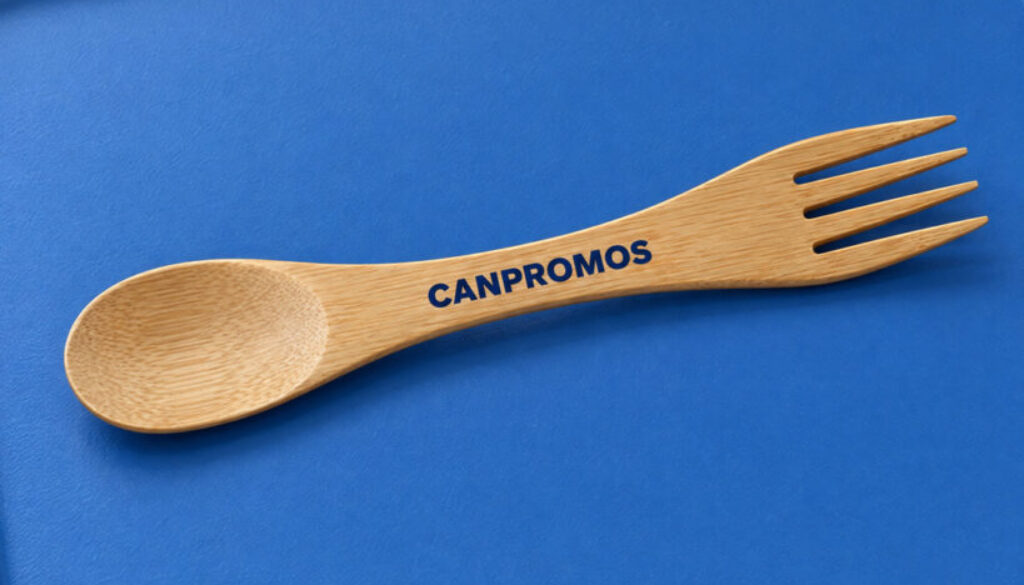
For an employee who needs only one personal utensil, the Custom Nimoy Bamboo Spork combines a spoon and fork in a single bamboo item. Handwashing is recommended on its listing. Give it a clean, dry storage position and confirm the product-specific care instructions rather than placing it in an assumed dishwasher routine.
Keep used utensils separate from clean drinkware, and make washing and drying possible before the next meal. For bottles employees already own, follow each bottle’s care instructions and use suitable cleaning tools. Neither a reusable utensil nor ordinary washing is a sanitation certification.
Prepare the first January workweek
Once received items are ready for use, give current employees a short, model-specific care and storage note. Identify their personal items, explain where clean pieces belong and name the facilities contact for shared-space problems. There is no need to turn a practical allocation into a presentation ceremony.
After two weeks, ask focused questions: did the container fit, did the tote close with the normal load, and was there somewhere to wash and dry the pieces? Address the reported obstacle before considering more merchandise.
To request a CanPromos quote, send the exact product URLs and SKUs, quantities, selected colours, intended decoration and required in-hands date. Ask for current Canadian stock, decoration details, artwork approval timing, production slot and freight, plus a supplier-confirmed receiving window before the December closure. A live listing is not a stock reservation or delivery guarantee. The finished plan should leave each employee knowing what is theirs, how to care for it and where it belongs.
References